
Forklift Jobs in 2026 - Will Automation Really Replace Operators?
If you are searching for information about forklift jobs in 2026, you are probably asking one of two questions. Either you are already an operator wondering if your job is under threat. Or you are thinking about getting into the industry and want to know if it is worth it before you commit.
At DW Forklift Training in Birmingham, we have been training operators for more than 25 years. We think you deserve a straight answer – not a sales pitch, and not a headline designed to worry you.
So here is what we actually know about forklift jobs in 2026.
What is actually changing in warehouses right now
Automation in warehousing is real. Autonomous guided vehicles and mobile robots are being used at scale by large logistics operators. Electric forklifts are replacing older diesel and LPG models. Warehouse management systems are becoming more sophisticated. These are genuine changes.
But here is the other side of that picture. Manual forklifts still represent the largest part of the market, valued for their reliability and flexibility across the enormous variety of environments in which they are used. Even the most ambitious projections for autonomous systems acknowledge that current technology handles the predictable and the repetitive well – which by definition leaves the complex, the unexpected, and the high-judgement situations to a skilled human operator.
The UK logistics sector supports more than 2.7 million jobs and is one of the most stable parts of the British economy. The Midlands Golden Triangle – Birmingham, Nottingham, and the corridor south to Northampton – remains the beating heart of UK distribution. Forklift jobs in 2026 across this region are not shrinking. Employers are actively advertising for qualified operators.
The honest truth about automation and smaller businesses
Fully autonomous forklift systems are expensive. Prohibitively expensive for the vast majority of businesses that employ operators across Birmingham, Wolverhampton, Coventry, Leicester, Northampton, and Nottingham. Implementation requires major investment, specialist IT, and a level of predictability that many real-world warehouses simply do not have.
The companies that offer most forklift jobs across the Midlands are not global giants. They are small and medium-sized businesses, regional distributors, manufacturers, and logistics operators – companies for whom a fully automated fleet is years away, if it ever comes. Industry analysts are consistent on this point: automation will take time, and it will be expensive for smaller operators.
The skills that technology cannot easily replicate
What autonomous systems struggle with: unexpected obstacles, damaged pallets, unusual load configurations, and the practical judgement that comes from experience and awareness. What they handle well: predictable, repetitive, high-volume movement in controlled settings where nothing changes.
The operators who will thrive in forklift jobs in 2026 and beyond are those building skills that work alongside technology. People who hold more than one licence. Reach truck specialists. Operators who take safety seriously. These are not things a robot does well yet – and they are exactly what good training develops.
The electrification opportunity
The shift to electric forklifts is already creating real opportunity. Electric trucks are a different experience – different handling, different pre-shift checks, different battery management. Operators who have updated their skills for electric equipment are more valuable to employers right now than those who have not.
For businesses currently switching their fleets, trained operators are not a cost – they are how you get value from the investment.
So should you pursue forklift jobs in 2026?
Yes. The average forklift operator salary across the UK currently sits at £14.43 per hour (Indeed, February 2026), with shift premiums pushing earnings higher. The Midlands logistics corridor is growing. Employers are competing for certified, reliable people.
No previous experience is needed to start training. No formal qualifications are required. A few days of RTITB accredited training with DW Forklift Training in Birmingham and you have a qualification that opens real doors to real forklift jobs in 2026 and well beyond.
The warehouse of 2035 will look different. But it will still need skilled people in it. And those people will need proper training to get there.
Find out more about our courses at DW Forklift Training, Birmingham.
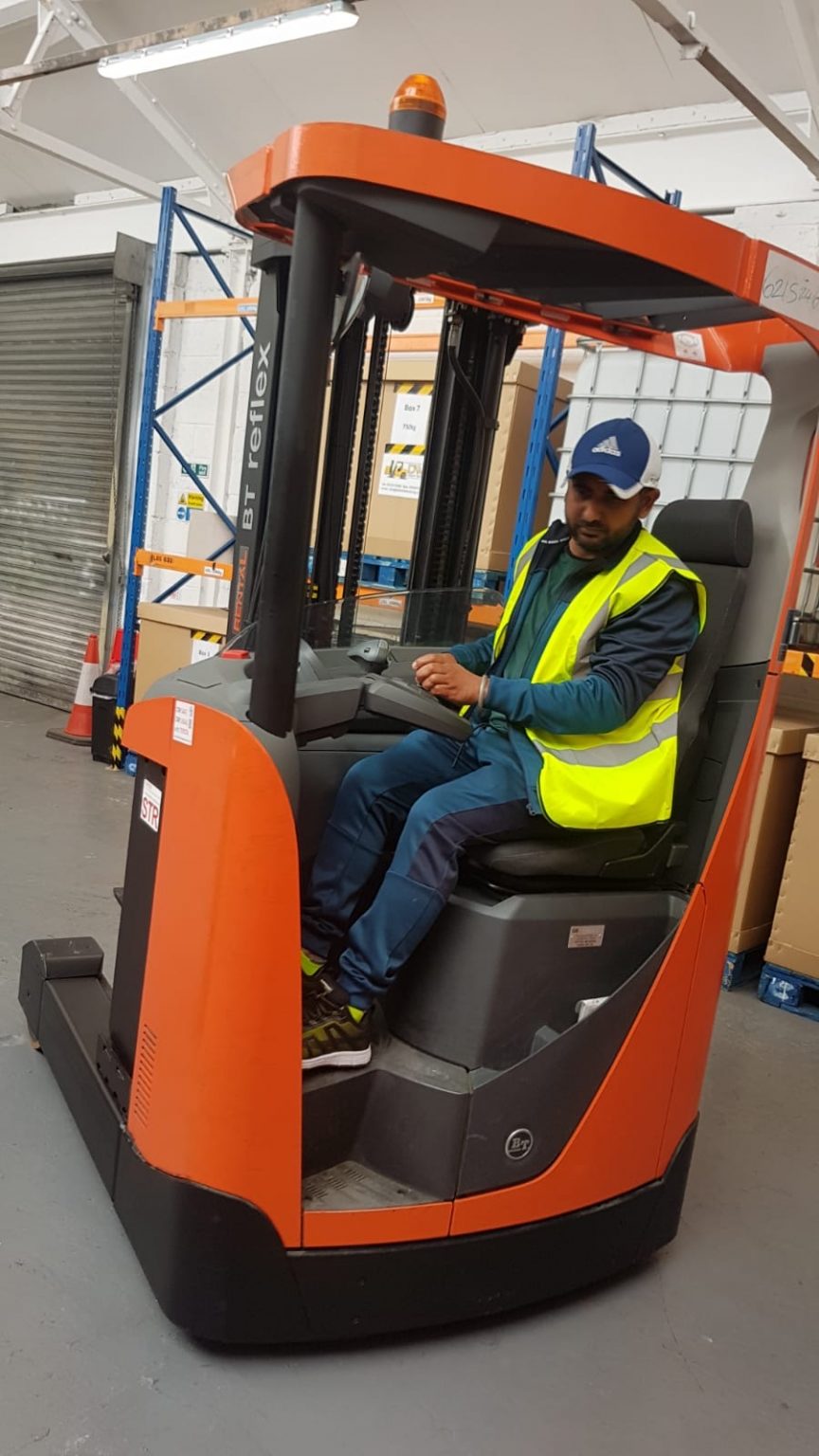
DW Forklift Training: Your REach Truck TRAINING Partner
Based in Birmingham and Leicester, DW Forklift Training offers comprehensive forklift training certification. We provide courses at our facilities or on-site to meet your business needs.
Courses include:
- Counterbalance Forklift Training
- Reach Truck Training
- Powered Pallet Truck (PPT) Training
Safety starts with training. Contact DW Forklift Training today to book your forklift training certification and create a safer, more productive workplace.
Contact us today to learn more about our training programs and take the first step towards becoming a qualified forklift operator! Explore our courses here!
Ready to take the next step toward your career goals? Contact DW Forklift Training today to enroll in our certification courses and gain the skills employers are looking for. Your future as a skilled forklift operator awaits!
Ready to unlock your success?
Remember, at DW Forklift Training, we’re here to help you succeed every step of the way. Let’s elevate your career together in the exciting world of forklift operation.
